
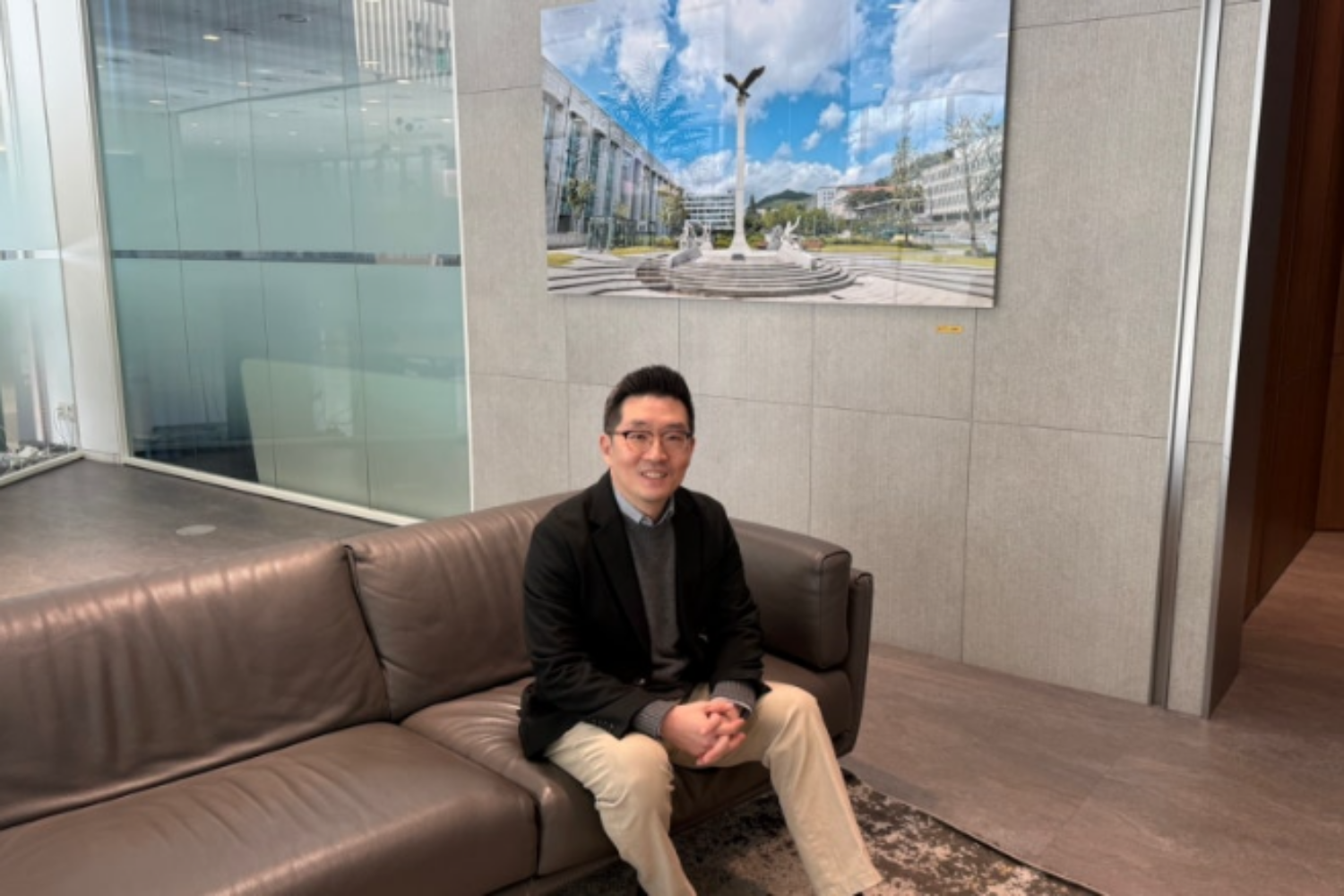
1. Could you please provide a brief self-introduction for the Yonseians and subscribers reading this article?
I am Jae-Hyung Jang, who entered the Department of Chemical Engineering at Yonsei University in 1993. After graduating with my undergraduate degree in 1999, I moved to the United States to continue my research and studies. I returned to Korea in January 2009 and have been serving as a professor in the Department of Chemical and Biomolecular Engineering at Yonsei University since March of that same year.
Currently, I conduct research and education in the bio-field at the university. Simultaneously, I am serving as the CTO of GluGene Therapeutics, a faculty-led startup I founded to develop research achievements into practical therapeutic technologies.
2. You are operating the faculty-led startup GluGene Therapeutics as its CTO. Could you introduce the company and explain the motivation behind its founding?
Gene therapy is an innovative medical technology that can treat the root causes of diseases by correcting defective genes within the cell nucleus or delivering normal genes to cells. In the past, it was extremely difficult to deliver genes safely and efficiently into the nucleus, so many genetic disorders were considered virtually incurable. However, recently, gene therapy has reached the commercialization stage, with cases reported of congenital blindness patients regaining their sight through these treatments.
To realize the value of such gene therapy, it is essential to have technology that accurately delivers therapeutic genes to problematic tissues or cells. This delivery technology is a core factor that determines the practicality, safety, and therapeutic effect of gene therapies. Focusing on this necessity, GluGene Therapeutics develops precision gene delivery vehicles that operate specifically to certain cells and tissues. Our goal is to implement gene therapies that maximize therapeutic effects while minimizing side effects and off-target actions by designing therapeutic genes to work selectively in specific organs or cells. Furthermore, we are expanding our research scope beyond delivery technology to develop treatments for various genetic diseases, including lung, retinal, and neurological disorders.
The main reason I decided to start a business was my desire to connect the research results accumulated in the lab over a long period to actual patient treatment, rather than letting them remain only in academic papers. While research on delivery vehicles is possible within a university, evolving them into actual treatments requires a comprehensive consideration of social impact, market value, regulatory response, production, and quality control—all of which have limits within a purely academic setting. During my time researching in the U.S., even though gene therapy was in its early stages, my advisor and fellow researchers, who believed in its potential, started their own companies to pursue commercialization. Their challenges eventually led to the actual commercialization of gene therapies. This experience served as a decisive turning point, convincing me that researchers should venture beyond the laboratory and into society.
Additionally, because the number of experts researching gene delivery vehicles in Korea was very limited, I felt a great sense of responsibility that I could not let the potential of this technology remain confined to research alone. Based on this sense of duty, I co-founded GluGene Therapeutics with Dr. Moon-Soo Lee, who joined me in this vision and participated in this donation.
3. GluGene Therapeutics recently donated 50 million KRW to the construction fund for the 5th Engineering Building. What led to the decision to make this donation?
– From CEO Moon-Soo Lee (CEO Lee, who could not attend the interview due to his schedule, provided his response in writing)
: Through my first startup, InnoTherapy, I experienced developing innovative products, undergoing clinical trials and global approvals, and successfully listing on KOSDAQ. It was deeply rewarding to adopt technology from KAIST, pursue technology commercialization, and grow alongside seniors, juniors, and colleagues in the scientific community while nurturing our dreams.
Later, while exploring new business opportunities, I became interested in ‘gene therapy’ and met Professor Jae-Hyung Jang, who had been silently conducting in-depth research. Finding a great researcher who aligned with my strategic insight, we are once again creating team-building energy together with Yonsei University.
Upon hearing that my co-founder, Professor Jae-Hyung Jang, was donating to the 5th Engineering Building fund, GluGene Therapeutics decided to contribute as well to support the growth of Yonsei University. With over 15 years of experience in the startup market, I have accumulated expertise in faculty technology commercialization, collaboration with the medical field, and various licensing processes.
I hope to melt these experiences into the startup founded by CTO Jae-Hyung Jang, holding hands with talented Yonseians to reach beyond the campus and into the industry.
– From Professor Jae-Hyung Jang
When visiting the headquarters of Google or Amazon, you can see that they are designed to be extremely researcher-friendly environments, allowing researchers and developers to immerse themselves fully. I believe that for innovative technologies and ideas to be born, the space where people stay and interact is just as important as the people themselves.
In reality, it is not easy for our Yonsei University students to secure even a little more research space. Despite these conditions, thanks to the efforts of many people, the 5th Engineering Building has become a reality. Hearing that its construction is being promoted through the support of school officials and alumni, I wanted to contribute even a small amount of strength. In particular, since I could give back the experience and capital gained while serving as both a professor and an entrepreneur to the school, I felt it was the beginning of a virtuous cycle where knowledge and achievements return to education and research. CEO Moon-Soo Lee empathized with this purpose, which led to GluGene Therapeutics participating in this donation.
4. Do you have any future plans for social contribution or goals at the corporate level?
Our primary goal is to link gene delivery technology to actual treatments, thereby creating social and market impact. Since gene delivery is a universal technology not limited to a single disease, we are simultaneously pursuing the development of treatments for several diseases and continuing research that reflects clinical needs and field perspectives through collaboration with various hospitals. Ultimately, we aim to enter the global clinical stage and develop technologies that provide practical help to patients worldwide, beyond Korea.
Personally, I am deeply grateful for the research environment and various opportunities Yonsei University has provided me. Based on these experiences, I want to provide students with realistic advice and mentoring regarding not only research but also entrepreneurship and commercialization. Many students are interested in startups but hesitate because they don’t know how to start; I believe my role as a professor in helping them is crucial.
Furthermore, I want to provide internship opportunities so that students can experience the frontline of venture companies and witness the process of innovative technology evolving from an idea into an actual product or treatment. I believe that these experiences contribute to patient treatment while also nurturing the next generation of researchers and entrepreneurs—that is my long-term social goal.
5. Finally, do you have any words for the students of Yonsei University?
I think the greatest difficulty students face is the fear of failure. However, scientific research essentially starts with a hypothesis, and it is rare for that hypothesis to be perfectly correct from the beginning. Rather, through repeated failures, one studies more deeply, asks better questions, and broadens one’s perspective through discussions with colleagues. True learning and innovation emerge from this accumulated process.
In our laboratory as well, many meaningful research results that led to publications in world-class journals began with numerous trials, errors, and problem-solving processes. Looking back, most significant research and technology can be seen as starting from various experiences of failure.
Whether it’s research or entrepreneurship, I believe a process of challenging oneself without fear of failure is essential. If you wait until everything is perfectly prepared, you might miss important opportunities. Since Yonsei University students possess sufficient potential and capability, I hope you will accept failure as a learning process and challenge yourselves boldly.
Start small but be bold in your challenges. If you fail, do not be too discouraged or ashamed; instead, treat it as an opportunity for growth. That experience will surely become the foundation for your next leap forward. I truly want to encourage you to take active challenges.
